
The Lone Star Tick
What Is a Lone Star Tick?
The lone star tick is the tick most closely linked to alpha-gal syndrome (AGS) in the United States.
Not everyone who is bitten by a lone star tick develops AGS, but most people diagnosed with AGS in the U.S. report being bitten by one or more lone star ticks. Other types of ticks may also cause AGS in some cases, but the lone star tick is the main one associated with the condition.
How Can You Recognize a Lone Star Tick?
The appearance of the tick depends on its stage of life.
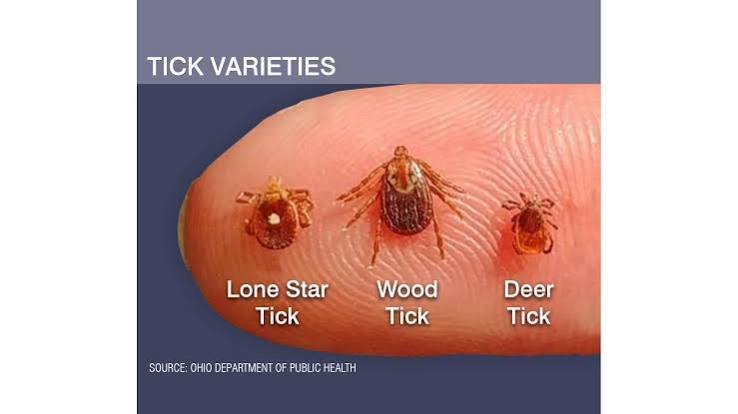
Adult female: Has a single bright white spot on her back. This "lone star" gives the tick its name.
Adult male: Does not have one large white spot. Instead, it has small white markings around the edge of its body.
Nymphs and larvae (young ticks): Very small and harder to identify.
Because young ticks are tiny, they are often mistaken for other insects.
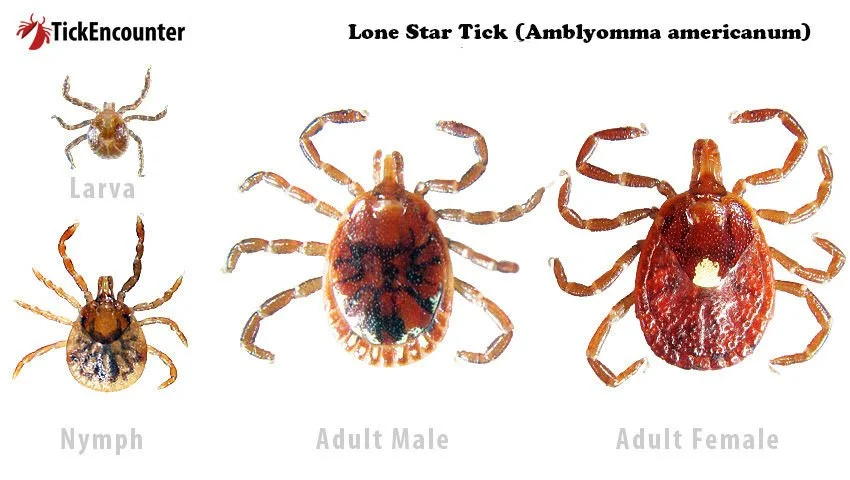
Each stage may also be capable of triggering alpha-gal syndrome.
Larvae are extremely tiny and may be mistaken for chiggers. During late summer and early fall, people may be bitten by dozens or even hundreds of larvae at one time. Multiple bites may increase the chance of developing AGS.
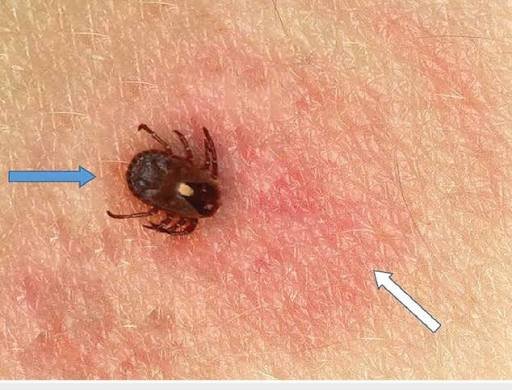
All three stages can bite humans.
The nymphs and adult females are responsible for most bites.
Where Are Lone Star Ticks Found?
Lone star ticks are common throughout much of the eastern, southeastern, and central United States.
They are especially common in states such as:
Virginia
North Carolina
Tennessee
Arkansas
Missouri
Oklahoma
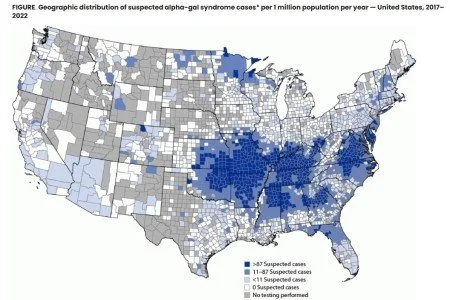
Their range has been expanding
They are now found in more parts of the Midwest and Northeast, and they have even been found in parts of Canada. Scientists believe this expansion is related to factors such as climate change, changes in land use, and growing deer populations.

Where Do They Live?
Unlike some tick species that prefer only forests or only grassy fields, lone star ticks can live in many different places.
Forests
Wooded trails
Tall grass
Brushy areas
Fields
Some yards and lawns
Because they can survive in many environments, they may be found almost anywhere people spend time outdoors.
When Are They Most Active?
Lone star ticks can be active for much of the year, especially in warmer parts of the country.

They are most likely to bite people during:
Spring
Summer
Early fall
In some southern states, they can remain active even during mild winters.
What Animals Do Lone Star Ticks Feed On?
Lone star ticks feed on many different animals, including:
White-tailed deer
Small mammals
Birds
Turkeys
Livestock
Humans
White-tailed deer are their favorite host and play an important role in maintaining large tick populations.
How Do Lone Star Ticks Behave?
Lone star ticks behave differently from many other tick species.
Many ticks simply wait on plants for a person or animal to brush past.
Lone star ticks are much more active.
They can:
Detect people and animals nearby.
Crawl quickly toward a person.
Travel several yards to reach a host.
Because of this, they are often described as aggressive hunters.
How Can You Protect Yourself?
To lower your risk of tick bites:
Wear long sleeves, long pants, and long socks when outdoors.
Use tick repellents as directed.
Wear clothing treated with permethrin if appropriate.
Stay on clear trails when hiking.
Avoid walking through tall grass or thick brush.
Check yourself, children, and pets carefully for ticks after spending time outside.
Remove attached ticks as soon as possible.
If you already have AGS, preventing future tick bites is especially important because additional bites may increase your allergy and make symptoms worse.
